
What Happens During an Ultherapy Treatment Session?
For patients concerned about mild skin laxity, Ultherapy is a non-surgical treatment that uses focused ultrasound energy to target deeper tissue layers beneath the skin. The treatment is designed to stimulate collagen production gradually, with results developing over time.
Understanding what happens before, during and after an Ultherapy session can help patients prepare for the procedure and set realistic expectations for recovery and results.
Who May Consider Ultherapy?
Ultherapy is often considered by individuals looking for a non-surgical option to address mild to moderate skin laxity with minimal downtime. It may be suitable for those noticing early signs of skin ageing and seeking gradual skin-tightening effects.
Common concerns include:
- Mild sagging along the jawline
- Loose skin around the neck
- Drooping skin beneath the chin
- Reduced definition of the lower face
- Mild brow heaviness
- Fine lines on the décolletage
What Happens Before an Ultherapy Session?
Before treatment, patients typically attend a consultation to assess their suitability for Ultherapy. During this appointment, the doctor will evaluate areas of skin laxity, review medical history, and discuss the patient’s aesthetic goals.
The consultation is also an opportunity to discuss:
- Treatment comfort and what to expect during the procedure
- Recovery and downtime
- The number of sessions that may be required
- When results may become noticeable
- Potential risks and side effects
Setting realistic expectations is an important part of the process. As Ultherapy works by stimulating collagen production, results develop gradually over the following weeks and months rather than immediately after treatment.
What Can You Expect During an Ultherapy Session?
Most Ultherapy sessions follow a similar treatment process, although the treatment plan is customised to the individual’s skin concerns and treatment areas. The procedure is performed without incisions or injections, and the duration of treatment depends on the size and number of areas being treated.
Marking and Preparing the Skin
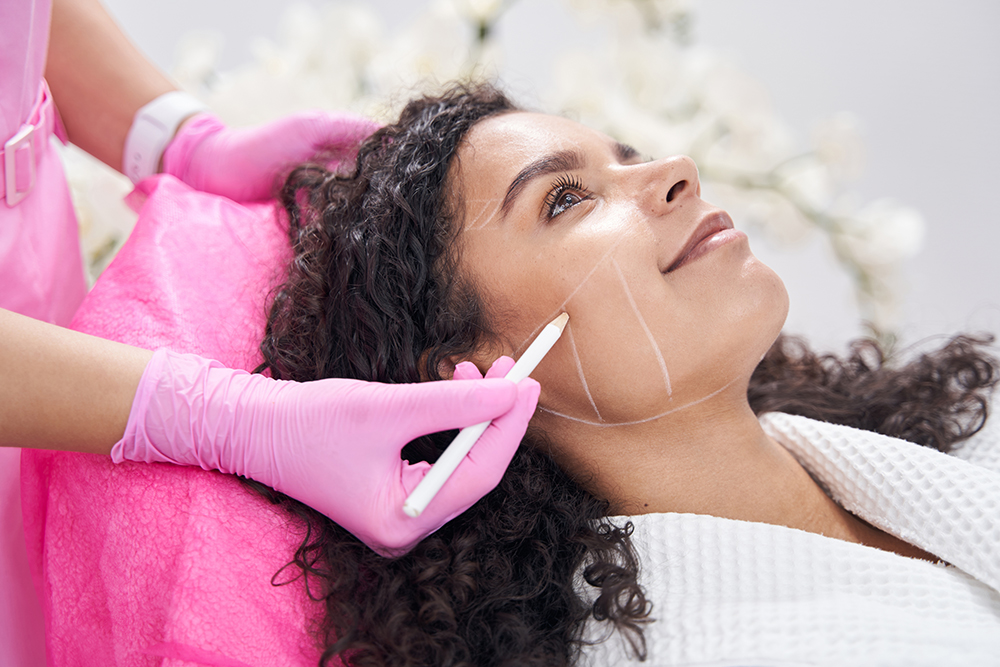
Before treatment begins, the skin is cleansed, and the doctor identifies the areas to be treated. Small markings may be placed on the skin to guide the positioning of the ultrasound device throughout the procedure.
An ultrasound gel is then applied to ensure proper contact between the handpiece and the skin, allowing both ultrasound imaging and energy delivery. Patients remain comfortably positioned on the treatment bed during this stage.
Use of Ultrasound Visualisation
A key feature of Ultherapy is its use of ultrasound visualisation, which allows the doctor to view tissue layers beneath the skin and guide energy delivery to the intended treatment depth.
Delivery of Ultrasound Energy
Once the treatment areas have been identified, the handpiece is placed against the skin to deliver focused ultrasound energy in a series of small pulses.
These pulses create controlled thermal points beneath the skin’s surface, which are intended to stimulate collagen production and support gradual tissue remodelling. The doctor systematically treats the planned areas, which may include the jawline, cheeks, neck or brow region.
As the energy is delivered, patients may experience brief sensations of warmth, tingling or discomfort. The intensity can vary depending on the individual and the area being treated.
What Happens Immediately After Treatment?
Most patients can return to normal daily activities shortly after Ultherapy. The treated skin may look mildly flushed or pink at first, but this usually settles within several hours.
Some patients may also experience:
- Mild swelling
- Tenderness
- Tingling sensations
- Temporary numbness
- Sensitivity when touching treated areas
These effects are usually temporary, although recovery varies from person to person. Some patients may also notice a mild tight sensation beneath the skin, while temporary swelling can occasionally last for 1 to 2 weeks.
When Do Results Usually Appear?
Ultherapy results develop gradually because the treatment works by stimulating collagen remodelling beneath the skin. This process takes time, so changes are not usually immediate.
Some patients may notice subtle tightening within the first few weeks. More visible changes often develop over 2 to 3 months as new collagen forms. Results vary between individuals and may continue to develop over several months following treatment.
How Long Do Ultherapy Results Last?
Ultherapy results vary from person to person. Some patients may notice tightening effects for a year or longer, while others may see gradual softening earlier as natural collagen loss continues.
Maintenance sessions may be considered over time, depending on the patient’s skin condition, treatment response and aesthetic goals. A doctor can advise whether repeat treatment is appropriate.
It is also important to keep expectations realistic. Ultherapy may provide gradual lifting and tightening for suitable patients, but the results are generally subtler than surgical procedures.
Understanding Your Ultherapy Treatment Options at The DRx Clinic
Ultherapy may be considered for patients seeking a non-surgical approach to mild skin laxity and age-related changes. However, treatment suitability depends on factors such as skin condition, treatment goals and individual expectations.
At The DRx Clinic, our doctors perform a personalised assessment before recommending a treatment plan. During the consultation, patients can discuss their concerns, expected outcomes, recovery considerations and whether Ultherapy or another treatment approach may be more appropriate.
Schedule an appointment with our medical team to assess your skin condition and discuss suitable treatment options.
Frequently Asked Questions About Ultherapy Treatment
Does Ultherapy treatment hurt?
Patients may experience sensations of warmth, tingling or discomfort as ultrasound energy is delivered beneath the skin. Comfort levels vary between individuals and treatment areas. Your doctor can discuss ways to improve comfort during the procedure.
How long does an Ultherapy treatment session take?
Treatment duration depends on the areas being treated and the treatment plan. Smaller areas may take less time, while full-face and neck treatments generally require a longer appointment.
Is there downtime after an Ultherapy treatment?
Most patients can resume their usual daily activities shortly after treatment. Temporary redness, swelling, tenderness or tingling may occur, although these effects are generally mild and resolve over time.
How many Ultherapy treatment sessions will I need?
Many patients undergo a single treatment session, although recommendations vary depending on skin condition, treatment goals and individual response. Your doctor can advise whether additional sessions may be beneficial.
Can Ultherapy treatment be combined with other aesthetic treatments?
In some cases, Ultherapy may be incorporated into a broader treatment plan alongside other aesthetic procedures. Treatment timing and suitability vary between individuals and should be discussed during a consultation.
What age is suitable for Ultherapy treatment?
There is no specific age requirement for Ultherapy. Treatment is generally considered based on the degree of skin laxity, individual concerns and treatment goals rather than age alone.